Six steps between your recording and a priced draft.
What actually happens when you hit run: transcript, vision, intake, estimate, pricing, proposal - and where you stay in charge.
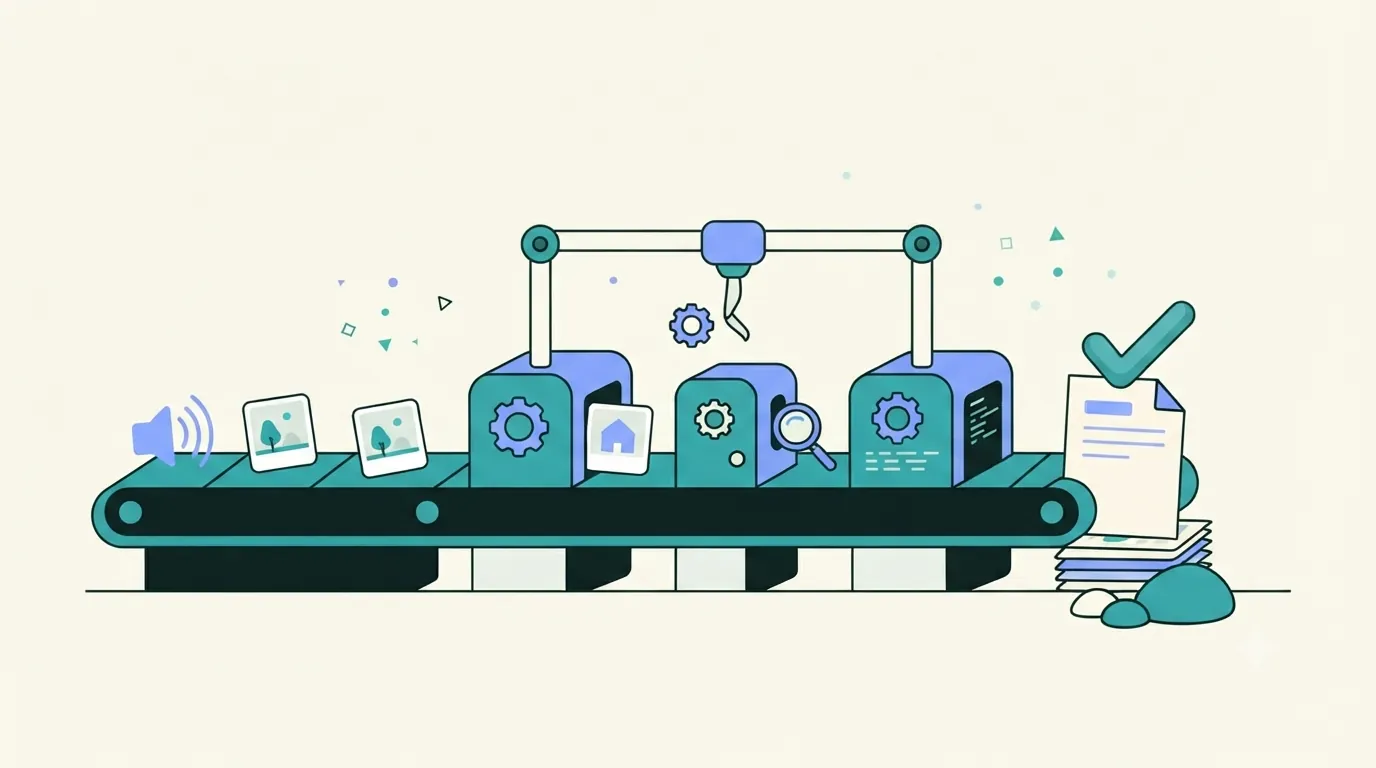
FlyQuote isn't one big magic button; it's a chain of small, checkable steps. Knowing what each one does makes the output easy to trust - and easy to correct when a job is unusual.
The chain
- Transcript - your call recording or voice memo becomes text.
- Vision - job photos are read for materials, damage, dimensions, and access.
- Intake - conversation and images merge into a structured job description: what's being done, where, under what constraints.
- Estimate - the scope becomes line items with quantities.
- Pricing - the engine computes each line from your own cost codes, formulas, markups, and minimums. The AI drafts the scope; it never invents the price.
- Proposal - the priced scope becomes a customer-ready document.
You're the editor, not the audience
Every step's output is visible on the request, and progress updates live while it runs. If the vision step misread a material or the estimate missed a line, fix it there and the later steps work from your correction. The draft exists so you're editing instead of authoring - the judgment stays yours.
Make it price like you
Upload a handful of your past estimates and the pricing step learns your structure and rates rather than industry averages - see the guide on style-matched quotes for how that works. And for exactly why a drafted price can be trusted, see why the pricing engine can't make a math mistake.